Itineraries guide · Trip planning
Multi-city itinerary: how to plan a trip through several cities
How long a move between cities really takes (door-to-door times for 18 train routes), how many nights each city needs, which order to go in, and a ten-day Italy plan built around its move days.
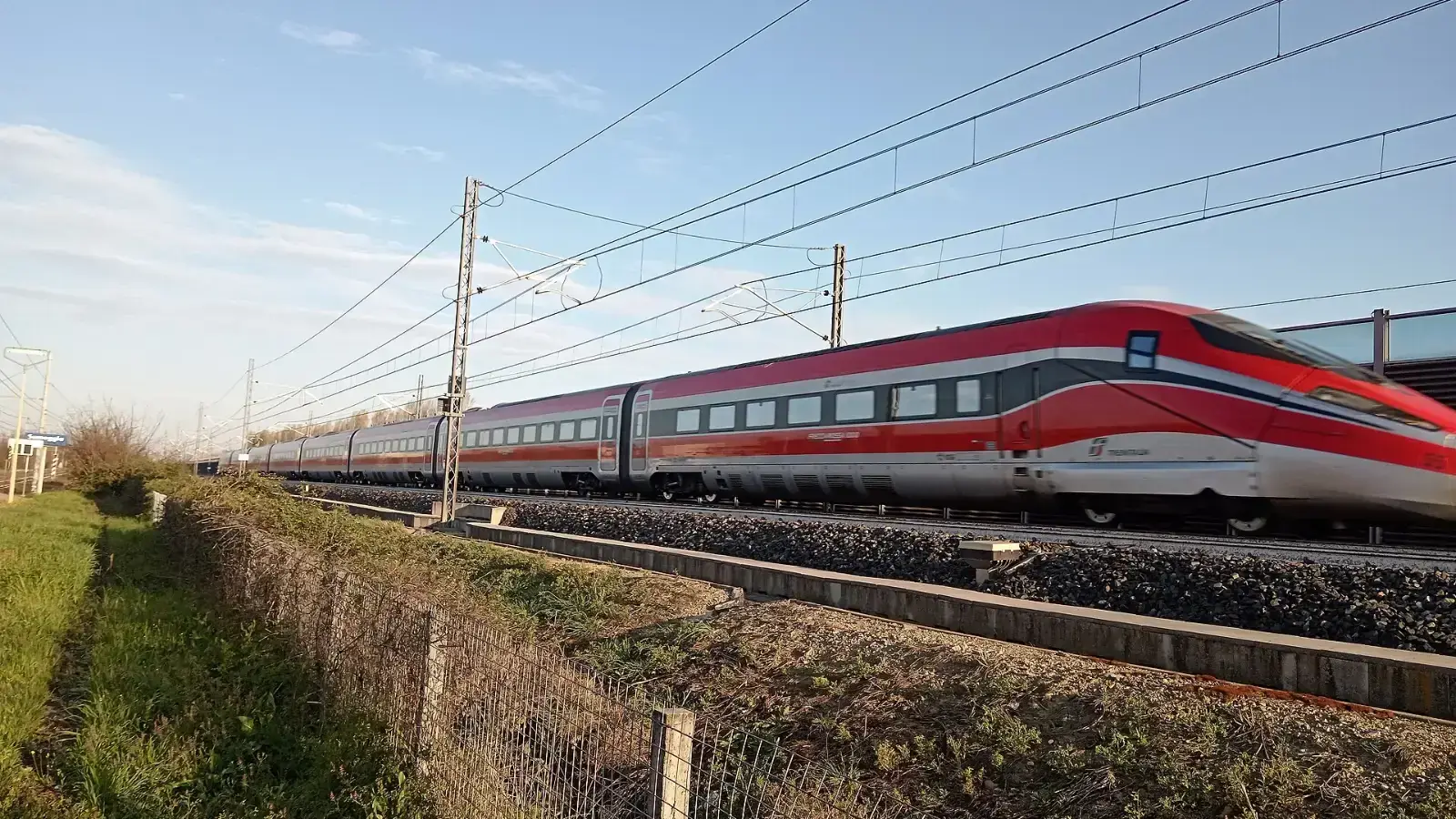
Short answer. Plan a multi-city itinerary from the moves outwards. Put the cities in a line or a loop so you never backtrack, count each hotel move as half a day (the 1 h 32 min Rome to Florence train is about 3 hours door to door), and give each city at least two nights, or three or more for a big one. Then plan the days inside each stay as you would a single-city trip.
A trip through several cities is really two plans: the moves, and the stays between them. Most itineraries plan the stays and treat the moves as a line on a map. Then the 92-minute train eats a whole morning.
This guide starts with the moves. It’s part of our guide to itineraries, and if you only need the single-city method, how to make a travel itinerary covers it.
Is a multi-city itinerary the same as a multi-city flight?
No. A multi-city flight is one airline booking with several legs, for example London to Rome and then Venice back to London. A multi-city itinerary is the whole trip: the cities, the nights in each, and how you move between them.
The two meet at the ends. Flying into one city and out of another (an “open jaw”) saves you a journey back to where you started. Price it both ways before you book, because a multi-city ticket is sometimes cheaper than two one-way flights and sometimes much dearer.
How long does a move between cities really take?
About twice the train time on short routes, and an extra hour and a half or so on long ones. The train is only the middle of the move. You also have to get to the station, be there early enough, and get from the station at the other end to the hotel.
We worked out door-to-door times for 18 popular routes with the same rules Amicly’s departure planner uses in its code: be at the station 30 minutes before a train (or what Eurostar itself recommends, which is longer), and leave for the station early enough for the journey plus a margin of at least 15 minutes. We assumed 20 minutes from the hotel to the station at each end.
| Route | Fastest scheduled train | Door to door (Amicly estimate) | Seat reservation |
|---|---|---|---|
| London to Paris (Eurostar) | 2 h 16 min | 4 h 26 min | Every seat reserved |
| Paris to Brussels (Eurostar) | 1 h 22 min | 3 h 32 min | Every seat reserved |
| Paris to Amsterdam (Eurostar) | 3 h 20 min | 5 h 30 min | Every seat reserved |
| Paris to Lyon (TGV) | 1 h 53 min | 3 h 18 min | Compulsory |
| Paris to Barcelona (TGV) | 6 h 50 min | 8 h 15 min | Compulsory |
| Madrid to Barcelona (AVE and others) | 2 h 30 min | 3 h 55 min | Compulsory |
| Lisbon to Porto (Alfa Pendular) | 2 h 58 min | 4 h 23 min | Compulsory |
| Rome to Florence (Frecciarossa) | 1 h 32 min | 2 h 57 min | Seat included |
| Florence to Venice (Italo) | 2 h 00 min | 3 h 25 min | Seat included |
| Rome to Naples (Frecciarossa) | 1 h 10 min | 2 h 35 min | Seat included |
| Amsterdam to Berlin (ICE) | 5 h 42 min | 7 h 07 min | Optional |
| Berlin to Prague (EuroCity) | 3 h 57 min | 5 h 22 min | Optional, except in summer |
| Prague to Vienna (railjet) | 4 h 13 min | 5 h 38 min | Optional |
| Vienna to Budapest (railjet) | 2 h 37 min | 4 h 02 min | Optional |
| Tokyo to Kyoto (Nozomi) | 2 h 08 min | 3 h 33 min | Not needed, except for big bags |
| Kyoto to Hiroshima (Nozomi) | 1 h 36 min | 3 h 01 min | Not needed, except for big bags |
| Kyoto to Nara (Kintetsu Limited Express) | 35 min | 2 h 00 min | Compulsory on this train |
| Kyoto to Osaka (JR Special Rapid) | 30 min | 1 h 55 min | No |
Journey times are the fastest scheduled trains published by the operators, or by The Man in Seat 61 where the operator doesn’t give one, checked on 29 October 2026. Many trains on each route are slower. The door-to-door column is our estimate, not a timetable.
Download the dataset: door-to-door times for 18 train routes (CSV), with stations, operators, reservation rules, the station time used for each route and a source link for every journey time.
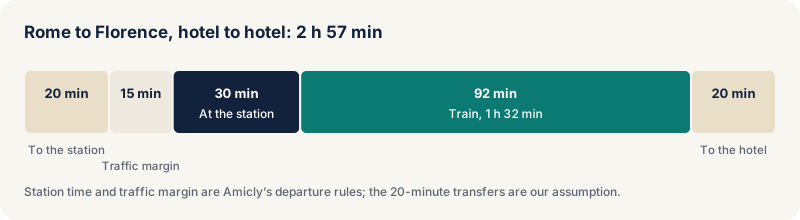
On the short routes the train is barely half the move. That’s why a day trip to Nara, 35 minutes away, still costs about two hours of travel each way once you include getting to and through the stations, and why it works better as an early start than an afternoon add-on.
How many nights should you spend in each city?
At least two nights anywhere you move to, which gives you one full day. Three or more for a big city. A move uses about half a day, so a two-night stay is one full day plus two half days, one of them spent arriving.
| Kind of stop | Nights | Why |
|---|---|---|
| A big city you want to see properly (Rome, Paris, Tokyo) | 3 to 5 | Room for timed tickets, a closing day and a slow day |
| A smaller city (Florence, Porto, Kyoto’s quieter sides) | 2 to 3 | One or two full days, plus the arrival afternoon |
| A town under about an hour away | 0, as a day trip | Saves a checkout and a check-in |
| A place with a long journey either side | One more than you think | You’ll arrive tired and leave early |
The quick test: count the full days. A full day is one with no checkout, no check-in and no long train. If a city has none, you’re passing through it, not visiting it. Our guide to usable hours shows how little an arrival day really holds.
Over a whole trip the moves add up. On a ten-day trip, three cities means two moves, about one day of travel. Five cities means four moves, about two days, and only a day or so of full sightseeing in each place.
Which order should the cities go in?
The order that never sends you back the way you came. Four shapes work:
- A line (Rome, Florence, Venice) with an open-jaw flight home from the last city.
- A loop that ends near the first city’s airport.
- Hub and spoke: one base with day trips, when the other places are under an hour away.
- A line with one base swapped for day trips, which cuts a move without cutting a place.
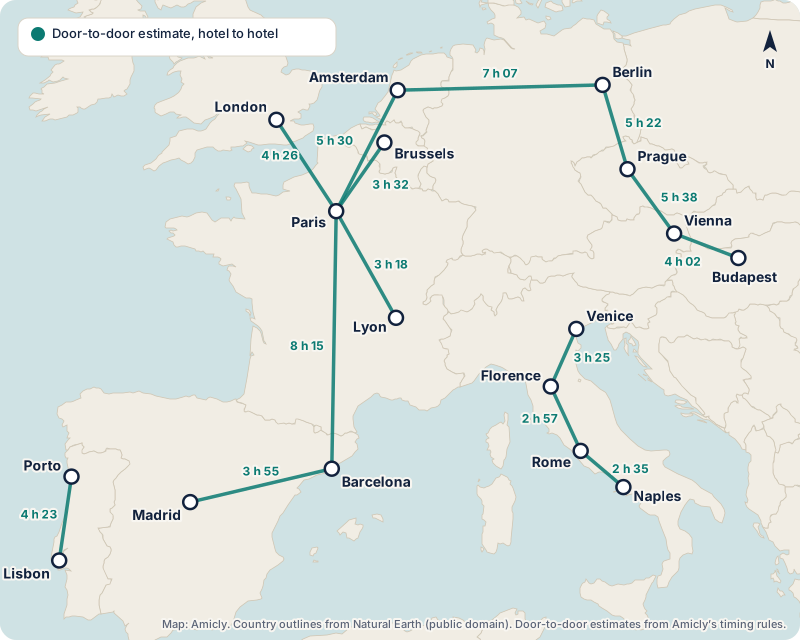
Two things often decide the order more than geography. One is the closing days: a museum you care about that’s shut on Mondays shouldn’t meet your Monday arrival. The other is flight prices into and out of each end.
An example: ten days in Italy, planned around the moves
Rome, Florence and Venice from Friday 13 to Sunday 22 November 2026, flying into Rome and home from Venice. Four nights in Rome, three in Florence, two in Venice: nine nights, two moves.
| Day | Plan | What the checks decided |
|---|---|---|
| Fri 13, Rome | Land, hotel, a short walk, early dinner | Arrival day: nothing booked |
| Sat 14, Rome | Vatican Museums, booked, from 08:00 | Closed on Sundays, except the last Sunday of the month |
| Sun 15, Rome | Colosseum and Forum, booked time slot | Open daily; tickets go on sale 30 days ahead |
| Mon 16, Rome | Pantheon, Piazza Navona, Trastevere | Light day before the move |
| Tue 17, Rome to Florence | 10:00 train (1 h 32 min on the fastest services), bags to the hotel, a walk to the Duomo | Leave the Rome hotel by 08:55 (Amicly’s rules: station by 09:30, 20 min transfer plus 15 min margin) |
| Wed 18, Florence | Uffizi, booked | The Uffizi and the Accademia both close on Mondays, so neither works on a Monday arrival |
| Thu 19, Florence | Accademia in the morning, Piazzale Michelangelo at sunset | Last full day in Florence |
| Fri 20, Florence to Venice | Late-morning train, about 2 hours, then the vaporetto to the hotel | About 3 h 25 min door to door |
| Sat 21, Venice | San Marco early, then a walk with no plan | The only full Venice day |
| Sun 22, Venice | Breakfast, then the airport | Be at the airport 3 hours before an international flight |
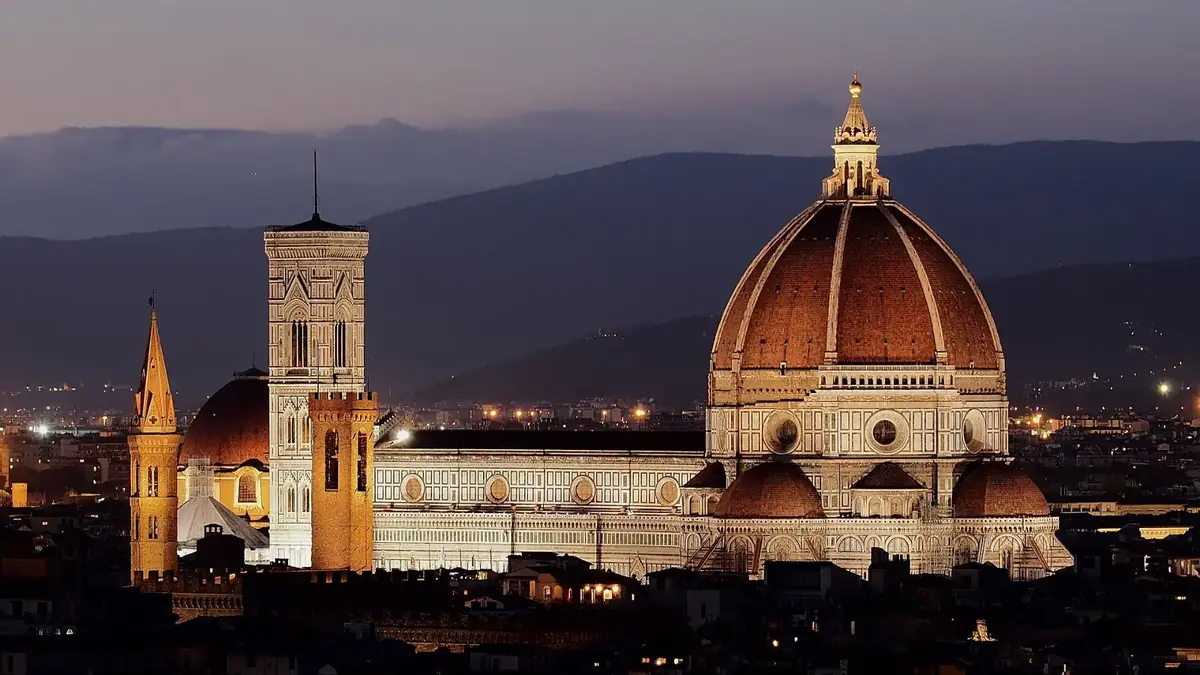
Notice what the plan doesn’t have: a museum on a move day. Tuesday and Friday each get one easy walk. And Florence’s two full days avoid Monday. Shift the whole trip by a few days and Florence could end up with a Monday as its main day, when both of its big museums are shut, which is exactly the kind of clash to look for before you book the trains.
How do you handle luggage on move days?
Check the operator’s rules for each train and plan where the bags will be between checkout and check-in. Three rules worth knowing:
- Eurostar closes the gate 30 minutes before departure for Standard and Plus, and recommends arriving 75 minutes ahead at London St Pancras and 75 to 90 minutes at Paris Gare du Nord.
- Shinkansen on the Tokaido and Sanyo lines: bags over 160 cm in total (length plus width plus height) need a reserved seat with an oversized baggage area, and bags over 250 cm aren’t allowed. Without a reservation there’s a ¥1,000 fee.
- Italian high-speed trains have no check-in, but the big stations, including Roma Termini and Firenze Santa Maria Novella, have ticket gates before the platforms.
When you arrive before check-in, most hotels will hold your bags. If yours won’t, see where to store luggage after checkout and before check-in.
Questions about multi-city itineraries
How many cities can you visit in two weeks? Three or four, with three or more nights in each. Five is possible, but you’d spend about two days of the fortnight moving.
Is it cheaper to book a multi-city flight? Sometimes. Compare a multi-city booking with separate one-way tickets for the same dates, and with an open-jaw return, before you choose.
What is an open-jaw itinerary? A trip where you fly into one city and home from another, covering the gap between them by train or road. It saves a journey back to where you started.
Do I need to reserve seats on European trains? On high-speed trains in France, Spain, Portugal and Italy, yes: the seat comes with the ticket or must be reserved. On many trains in Germany, Austria and the Czech Republic it’s optional, but worth it in summer. Eurostar reserves every seat.
Can Amicly plan a multi-city trip? Plan each city stay as its own trip, then use Amicly’s departure planner for each move day: give it your checkout, your train time and “train” as the journey type, and it works out when to leave, with the 30-minute station rule and a traffic margin.
Sources
- Amicly dataset: door-to-door times for 18 train routes (checked 29 October 2026) · checked 29 October 2026
- Eurostar: London to Paris · checked 29 October 2026
- Eurostar: check-in times · checked 29 October 2026
- Trenitalia: Frecciarossa Rome to Florence · checked 29 October 2026
- Italo: Florence to Venice · checked 29 October 2026
- Kyoto City Tourism: getting to Kyoto from major cities · checked 29 October 2026
- Nara City Tourism: access · checked 29 October 2026
- JR Central: oversized baggage on the Shinkansen · checked 29 October 2026
- The Man in Seat 61: train guides (journey times and reservation rules) · checked 29 October 2026
- Amicly dataset: opening days and booking rules for 38 famous sights · checked 29 October 2026
- Vatican Museums: opening hours · checked 29 October 2026
- Wikimedia Commons: Frecciarossa Train (Samoggia) in 2024 (CC0) · checked 29 October 2026
- Wikimedia Commons: Florence Duomo from Michelangelo hill (CC BY-SA 4.0) · checked 29 October 2026
- Natural Earth: country outlines (public domain) · checked 29 October 2026
Spotted something out of date? Report a correction. How we review