Itineraries guide · Arrival and departure
How long it takes to get out of the airport after landing, and to your hotel
Plan on about an hour from landing to leaving the airport after an international flight, and up to 1 hour 45 on a slow day. Planning ranges, the waiting rules of 12 transfer services and a hotel-arrival calculator.
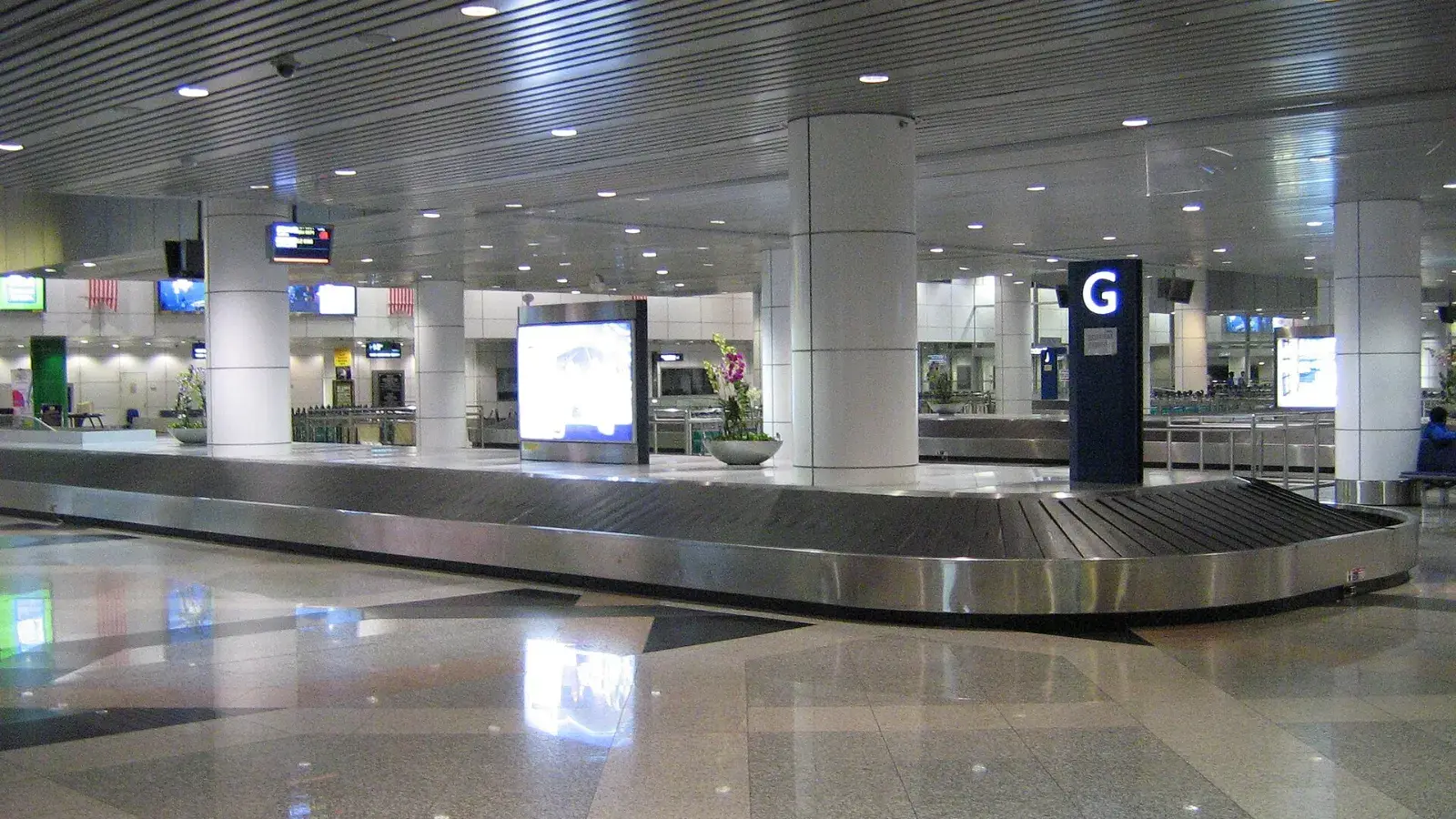
Short answer. Allow about an hour from landing to leaving the airport after an international flight, and 15 to 60 minutes after a domestic one, depending on bags. Blacklane’s pickup data puts the median at 38 minutes for international arrivals and 23 for domestic ones, but a long passport queue with checked bags can take 1 hour 45. Add the journey to your hotel, and check when your driver’s free waiting time starts: at landing or at your booked pickup time.
The short answer is about an hour from landing to the airport exit after an international flight, and less after a domestic one. But that hour isn’t the number that shapes your first day. What matters is when you’re at the hotel door with your bags, whether the driver you booked is still there when you come out, and whether there’s a room behind the door.
This guide covers the destination end of the trip: from the aircraft door to your room. If you’re trying to work out when to leave for a flight, read how early to get to the airport instead.
How long does it take to get out of the airport after landing?
Plan on about 60 minutes after an international flight and 15 to 60 minutes after a domestic one, from the moment the plane lands to the moment you leave the terminal. On a quiet day with only hand luggage it can be much quicker. With a long queue at passport control and checked bags, it can take 1 hour 45 or more.
The published numbers disagree because they measure different things:
| Source | What it says | What it measures |
|---|---|---|
| Blacklane Airport Exit Index | Median 38 minutes for international arrivals, 23 for domestic | Time from the aircraft seat to the chauffeur’s car, across Blacklane’s pickups |
| Blacklane data via Business Travel Show Europe (March 2025) | 15.5 minutes at Luxembourg to more than 50 at Kansai; Heathrow 39, Gatwick 40, JFK 45, Narita 49 | Median exit time at named airports, 2024 data |
| Klook | Book an international pickup 90 minutes after landing; 40 minutes for domestic with checked bags, 20 with hand luggage only | A transfer company’s booking advice, with spare time built in |
| Amicly’s planner | 60 minutes from landing to leaving the airport, at any airport | A planning default used to start day 1 of every itinerary |
A median is the middle value, so half of Blacklane’s passengers took longer than 38 minutes. Their customers also skew towards business travellers, who often carry less and use fast-track lanes. That’s why a transfer company that has to put a driver in the right place asks for 90 minutes, and why Amicly uses an hour rather than the median.
An hour is a good single number. If you want to know how far it can stretch for your kind of arrival, these are the ranges we plan with. The quick end is a calm morning; the slow end is a busy one, not a disaster.
| How you’re arriving | Hand luggage only | Checked bags |
|---|---|---|
| Domestic flight, or within the Schengen area | 15 to 35 min | 25 to 60 min |
| International, with e-gates or your own passport lane | 20 to 60 min | 30 to 85 min |
| International, full check at a passport desk | 30 to 80 min | 40 to 105 min |
| Known long queues, or a first biometric registration | 45 to 125 min | 55 to 150 min |
Amicly’s planning ranges, built from the published figures in this guide. They are not measured queue times. Add up to 15 minutes with young children.
Two more reference points. A parliamentary question in the House of Lords quotes Heathrow’s Border Force targets as 95% of queue measures under 25 minutes for UK and EU passengers, and under 45 minutes for everyone else. And Luton Airport told Bedfordshire Live in 2022 that passengers can expect 40 to 50 minutes from landing to having their bags.
What happens between landing and the exit?
For most international arrivals, the order is: leave the aircraft, follow the arrivals signs, show your passport and any entry documents at border control, collect checked bags, pass customs and walk out into the public arrivals hall. GOV.UK’s air passenger guide describes border control first, then baggage reclaim. Heathrow’s arrivals pages give the same order.
Each step has its own way of running late:
| Step | Quick day | Slow day | What usually decides the time |
|---|---|---|---|
| Leaving the aircraft and the walk | 10 min | 20 min | Where you’re sitting, a jet bridge or a bus, how far the gate is from arrivals |
| Border control | 0 to 15 min | 25 to 90 min | How many flights landed together, whether your passport can use e-gates, a first-time registration |
| Baggage reclaim | 0 to 10 min | 25 min | Your bags are often on the belt by the time you clear passport control; if you were quick, you wait for them |
| Customs and the exit | 5 min | 15 min | Usually quick unless you declare something; then the walk to the rank, station or meeting point |
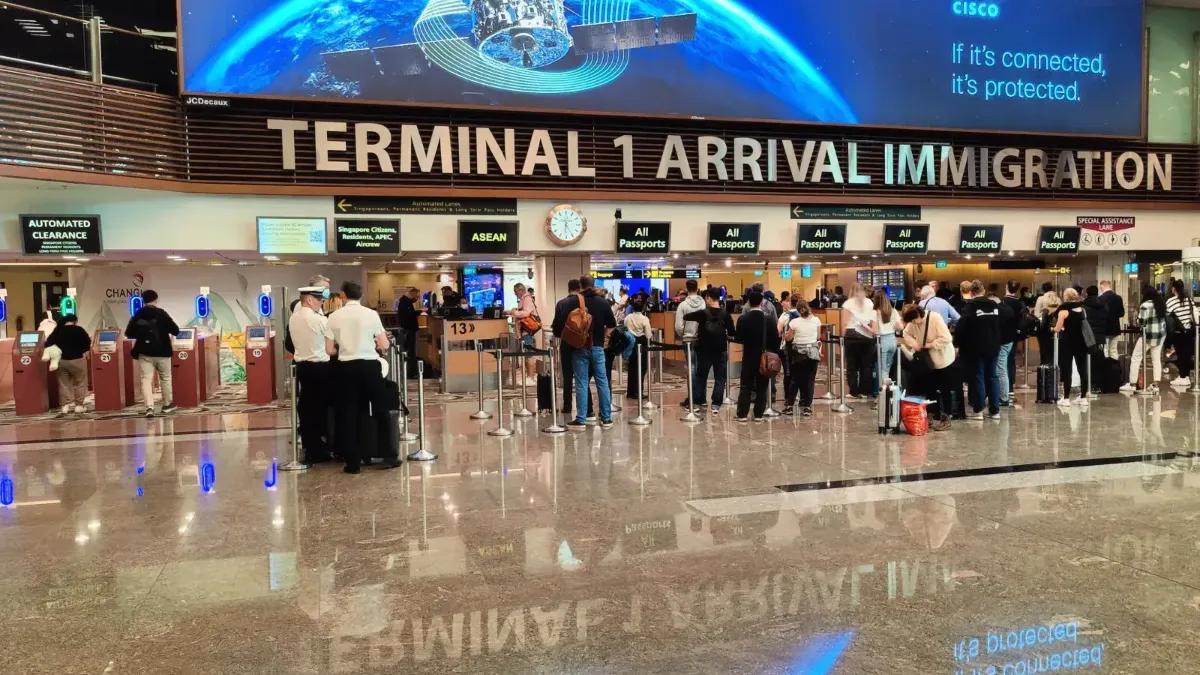
Border control is the step that moves most, and in Europe it changed this year. The EU’s Entry/Exit System became fully operational on 10 April 2026. Non-EU visitors on a short stay now have their face photographed and fingerprints taken at the Schengen border instead of a passport stamp. Germany’s aviation authority warned on 1 April that the changeover may mean waiting times at busy periods. If it’s your first trip to Europe since April, use the bottom row of the ranges table.
In the United States, U.S. Customs and Border Protection publishes Airport Wait Times by airport and hour. Looking up your arrival hour there is the most honest estimate you’ll get for a US airport.
Domestic flights and arrivals inside a common travel area usually skip border control, which is why they’re faster. Preclearance routes (some flights to the US, for example) move the border check to the departure airport.
If a bag doesn’t arrive, sort it out before you leave the reclaim hall. Heathrow sends passengers to the airline’s desk in baggage reclaim for delayed, damaged or missing bags, and most airports work the same way. Once you’re through customs, it’s much harder to get back.
When will I actually reach my hotel?
Add three things to your landing time: the airport exit, the journey to the hotel, and a few minutes to drop your bags. Amicly’s planner uses 60 minutes for the airport, the journey time for your route (40 minutes until it knows the real one) and 15 minutes at the hotel desk. The first stop of your day can’t start before that.
The calculator shows that planner time next to a quick-day and slow-day window for your kind of arrival. If you’ve booked a driver, add their free waiting time and it tells you whether it covers the slow end.
When will I reach my hotel?
Enter your landing time and how you’re arriving. The times update as you type.
At the hotel –
Amicly’s planner allows 60 minutes from landing to leaving the airport, then the journey, then 15 minutes to drop your bags. The quick-day and slow-day window uses the planning ranges in this guide, which are estimates, not live queue times, plus a traffic margin of at least 15 minutes on the slow end. Plan your arrival day in Amicly.
The slow end adds the same traffic margin Amicly’s departure planner puts on every transfer: at least 15 minutes, or a quarter of the journey if it’s a long one. Plan anything you’ve paid for around the slow end, not the quick one.
Worked examples: five arrival times with Amicly’s rules
These use the same rules as Amicly’s planner (60 minutes through the airport, then the journey, then 15 minutes to drop bags), with a 15:00 check-in. The journey times are examples, not checked routes.
| Arrival | Lands | Out of the airport | At the hotel | Bags dropped | Until check-in |
|---|---|---|---|---|---|
| Solo traveller, hand luggage, 35-minute train | 07:15 | 08:15 | 08:50 | 09:05 | 5 h 55 min |
| Two adults and two children, checked bags, 50-minute taxi | 08:00 | 09:00 | 09:50 | 10:05 | 4 h 55 min |
| The same family, allowing 90 minutes for the airport | 08:00 | 09:30 | 10:20 | 10:35 | 4 h 25 min |
| The same family, flight lands 90 minutes late | 09:30 | 10:30 | 11:20 | 11:35 | 3 h 25 min |
| Late flight, 40-minute journey | 22:40 | 23:40 | 00:20 the next day | 00:35 | Check-in time passed |
A few things stand out. The solo traveller has almost six hours to fill before the room is ready, so the question isn’t the airport at all: it’s what to do with the morning (our guide to what to do before hotel check-in covers that). The family loses half an hour of their morning by planning cautiously, which is a small price for not missing a prepaid booking. And the late flight arrives after midnight, which changes the hotel question completely (more on that below).
Amicly’s planner flags any arrival day that would start at 20:00 or later as a late arrival.
When should I book my pickup for?
About 60 minutes after landing for an international flight, and 20 to 40 minutes after a domestic one. The transfer companies say much the same:
- Blacklane: “For most international arrivals, we recommend a buffer time of one hour.”
- A to B Transfer: add 20 minutes to your arrival time for meet and greet, and 30 more if you pass passport control or collect bags. That’s 50 minutes.
- Klook: 90 minutes after landing for international flights; 40 for domestic with checked bags, 20 with carry-on only.
- SIXT ride: you choose a buffer of up to 2 hours, and the driver works from your actual landing time plus that buffer.
Read what the booking form is asking for. Some ask for your landing time and track the flight. Others ask for the time you want to meet the driver, which is a different thing. Our guide to how long after landing to book an airport transfer explains the three kinds of booking form and works out the time to type. And before you pay, find out the one detail that decides whether the driver is still there when you come out: when the free waiting time starts.
How long will my driver wait for me?
Usually 60 minutes, but the clock starts in three different places depending on the company. We read the help pages of 12 transfer services and ride apps on 11 November 2026:
| Service | Free wait at the airport | The clock starts at |
|---|---|---|
| Blacklane | 60 min | Your booked pickup time |
| Welcome Pickups | 60 min | Your selected pickup time (moved if the flight is late) |
| Suntransfers | Up to 60 min | Landing |
| City Airport Taxis | 60 min maximum | Landing (“flight arrival”) |
| A to B Transfer | 60 min | Your booked pickup time |
| Kiwitaxi | 90 min | Scheduled arrival time |
| Taxicode | 45 min, unless stated otherwise | Your booked pickup time |
| Wheely | 60 min | Landing (you book with your flight number) |
| Transfeero | 60 min | Your pickup time, or actual landing if you gave a flight number |
| Klook | Varies by provider | Your selected pickup time |
| Uber Reserve | 35 to 60 min, by trip type | Landing |
| SIXT ride | Varies by booking class and region | Actual landing plus your chosen buffer |
Download the dataset: free waiting time, pickup advice, flight tracking and extra charges for 12 airport transfer services (CSV), with the official wording and a link for each. The terms on your own booking override these pages.
What that means in practice:
- If the clock starts at landing, give them your flight number, then compare the free wait with the slow end of your exit range. Sixty minutes from landing doesn’t cover a full passport check with checked bags on a busy morning (up to 105 minutes in our ranges).
- If the clock starts at your booked time, book the pickup for your landing time plus the slow end of your range, minus the free wait. On a quick day the driver waits a little for you; on a slow one they haven’t left yet.
- If you need longer than the free wait, ask before you pay. Wheely charges each extra minute at its standard fare, Taxicode’s operators “typically” charge around £5 per 30 minutes, and most others say only that charges may apply.
Two examples, worked out with the calculator. A couple flying New York to Lisbon land at 07:30 with checked bags and a full passport check. They’re out between 08:10 and 09:15. If their driver’s 60 minutes start at landing, the free wait ends at 08:30, so on a busy morning the driver could be gone. A family of four landing at Heathrow from Dubai at 06:55, with children and checked bags, are out between 07:35 and 08:55. With a company whose clock starts at the booked time, a pickup booked for 07:55 keeps the driver there until 08:55.
Whichever company you use, call the number on your booking from inside the terminal if passport control or a missing bag is holding you up. Suntransfers, City Airport Taxis and Blacklane all ask for exactly that. Flight tracking covers a late plane, not a slow queue after an on-time landing.
Save the exact meeting point and the driver’s contact details somewhere you can open without data. “Arrivals” can mean several doors in several terminals.
Should I book anything for the first few hours?
Only things you can move. A 90-minute flight delay is common enough that a fixed, prepaid activity before about midday on an early arrival is a gamble. In the family example above, a delay turns a relaxed 10:05 start into 11:35.
A useful test: work out your hotel arrival with the slow-day window and the one-hour-late box ticked. If a booking still fits, keep it. If it only works when everything goes right, move it to day 2 or pick something near the hotel that you can drop without losing money.
How do I choose between the train, a taxi and a transfer?
Compare the whole journey from the arrivals hall to the hotel door, not just the main leg. A fast airport train can leave you with stairs, a change and a ten-minute walk with suitcases, while a taxi takes longer on the road but stops at the entrance.
| Option | Often suits | Check before you choose |
|---|---|---|
| Airport train or metro | A hotel near a station on the line | Service on your date and time, the walk from the station, lifts or stairs |
| Bus or coach | A stop close to the hotel | Where it leaves from, how often, luggage space, the last departure |
| Official taxi | A direct ride with no fixed meeting time | Where the official rank is, how the fare is worked out, card payment, car size |
| Prebooked transfer | A fixed meeting point and a driver who tracks the flight | When the free wait starts, how long it lasts, the vehicle size |
| Ride app | An airport with a marked pickup zone, and mobile data on arrival | Where the pickup zone is: often a car park, not the kerb |
| Hotel shuttle | A hotel that confirms one runs from your terminal | Times, whether you must book, any charge |
Use the airport’s own transport pages and the operator’s timetable for the actual day you land. Heathrow, for example, splits its information into train, bus and coach, taxi and car pages. A weekday timetable doesn’t tell you about a Sunday, a public holiday or planned engineering work. For a real example, our Lisbon arrival day guide compares the Metro, taxis and ride apps with the prices checked at the airport.
For a group, compare the total. Train tickets are usually per person, while a taxi or transfer is priced per car, so four people with bags can find a car costs about the same.
When can I actually get into my room?
Reaching the hotel and getting into a room are two different times. Standard check-in is often mid-afternoon, and an early check-in request is just a request until the hotel confirms it. Hilton’s help pages say early check-in availability varies by hotel and isn’t guaranteed.
Email the hotel with your hotel arrival time from the calculator, not your landing time. Ask whether they can hold your bags, what an early check-in would cost, and whether there’s anywhere to freshen up. If you need to sleep the moment you arrive, the only reliable answer is to book the room from the night before. Our guide to what to do before hotel check-in has the check-in rules of 12 hotel chains, a message you can copy and sample arrival days for different landing times.
What changes if I land after midnight?
The booking date. Holiday Extras puts it plainly: if you’re checking in after midnight, “you need to book for the date before”. Land at 02:00 on 13 June and your night is 12 June. The same applies when an evening flight runs late: land at 23:30 on Monday, reach the hotel at 01:00 on Tuesday, and a reservation starting Tuesday may not give you a room until Tuesday afternoon. Our guide to hotel check-in after midnight works out the night from your landing time and shows how long hotels hold the room.
Then make sure someone will let you in. Ask whether reception is staffed overnight or how you get in if it isn’t, and send your flight number with your expected arrival time. Something like this works:
Hello, our reservation starts on the night of Tuesday 17 November (booking reference ABC123). Our flight lands at 00:35 on Wednesday 18 November, and we expect to reach the hotel between 01:30 and 02:35. Could you confirm that the room is held for us and how we check in at that hour?
Also check the last train or bus from your terminal. If your plan only works when you make the last train, price the taxi as well, so you know what the backup costs before you’re standing in the arrivals hall. Our guide to arriving after the last train checks your landing against the last departure and lists the night options at nine airports.
What should I sort out before I fly?
Save what you’ll need where you can open it without a connection: the hotel’s address (in the local language too, where that helps a driver), the booking confirmation, your transfer details and the hotel’s phone number. A screenshot of the meeting point helps.
Decide how you’ll get mobile data on arrival and set it up before you leave home, so you’re not relying on airport Wi-Fi to find your driver. Our guide to preparing your phone for international travel walks through eSIMs, offline maps and the apps to install first. Keep a second way to pay for the journey in case your first card or app doesn’t work.
What if something goes wrong on arrival?
Decide your backup before you land, with a trigger and a spending limit. “Get a taxi if needed” is only useful if you know where the official rank is and roughly what it costs.
| If this happens | First thing to do | Have ready beforehand |
|---|---|---|
| The flight lands late | Tell the transfer company and the hotel your new time | Their contact numbers, saved offline |
| You’re stuck in the passport queue | Call the transfer company from inside the terminal | The emergency number on your booking |
| The train or bus isn’t running | Switch to the backup you chose | Where the taxi rank is and a rough fare |
| A bag doesn’t arrive | Report it at the airline desk in baggage reclaim | Bag tags and the hotel address for delivery |
| Your phone has no data | Open the saved instructions and call or text | The address and numbers on paper or in a screenshot |
| The room isn’t ready | Leave bags at the desk and use the time nearby | The hotel’s luggage storage hours |
For a group arriving on different flights, agree in advance how long the first arrivals will wait before heading to the hotel. It stops a delay on one flight from stranding everyone in the terminal.
Your arrival checklist
Copy this into your trip notes and fill in the blanks before you fly:
- Landing date and time in local time, flight number, airport and terminal.
- Your hotel arrival window from the calculator, quick day and slow day.
- Hotel address, entrance, phone number, and whether reception is open when you arrive.
- Confirmed room access time, or a confirmed place to leave bags.
- Main way to the hotel, where it leaves from and how you’ll pay.
- For a prebooked driver: the meeting point, the phone number, and when the free wait starts.
- A backup, with a rough cost.
- Offline copies of everything above, and a charged phone.
- One easy thing near the hotel for the first few hours, that you can drop.
Amicly can plan this part of the trip for you. Its arrival and departure planner takes your landing and check-in times, your group and your bags, and plans the hours in between, with every estimate labelled. The AI features need a free sign-in with email or Google, and your trips stay on your phone.
Quick answers
How long does it take to get through passport control and customs? In our planning ranges, 15 to 45 minutes at a desk and 5 to 25 with e-gates, with customs usually a short walk after the bags. At a busy hub, or on a first entry under the EU’s Entry/Exit System, allow up to 90.
Is one hour enough to get out of the airport? For most domestic flights, yes. After an international flight it covers a typical day, which is why Amicly’s planner uses it, but not a busy one with checked bags. Our slow-day figure for that arrival is about 1 hour 45.
What if my bag doesn’t come out? Report it at the airline desk in baggage reclaim before you go through customs, and give them your hotel address so the bag can be delivered there.
Is it faster with only hand luggage? Usually. You skip the wait at the belt, which is often the longest step after border control. Klook’s booking advice for domestic flights, for example, halves the time from 40 minutes to 20 when you have no checked bags.
Why is my airport so slow? Long walks, many flights landing at once and border checks for visitors all add time. In the Blacklane data, the slowest large airports (Kansai, Narita, Santiago, JFK) took 45 to more than 50 minutes at the median, more than double the quickest.
What happens to my transfer if the flight is delayed? If you gave your flight number, most companies track the flight and move the pickup. Kiwitaxi follows delays under 30 minutes and asks you to call for longer ones. Check your own booking’s terms.
How long after landing should I book a train? If the ticket is fixed to one departure, leave at least the slow-day airport time plus the walk to the platform, or buy a flexible ticket. With some fixed-time tickets, a missed train means buying a new ticket.
What this guide doesn’t cover
It doesn’t predict queue times at a particular airport on a particular day, decide whether you can enter a country, or promise hotel access, transport times or prices. For those, check the official entry rules for your destination, the airport’s own pages and the companies you’ve booked with, close to your travel date.
Sources
- Amicly dataset: free waiting time and pickup advice of 12 airport transfer services (checked 11 November 2026) · checked 11 November 2026
- Blacklane: Airport Exit Index (updated 27 May 2025) · checked 11 November 2026
- Business Travel Show Europe: Fastest and slowest airports to get through (March 2025, Blacklane data for 2024) · checked 11 November 2026
- GOV.UK: Air passenger travel guide (arrival at your destination) · checked 11 November 2026
- Heathrow: Baggage reclaim · checked 8 November 2026
- Heathrow: Transport and directions · checked 8 November 2026
- European Commission: The Entry/Exit System will become fully operational on 10 April 2026 · checked 11 November 2026
- Luftfahrt-Bundesamt: New Entry-Exit-System, waiting times at German airports are possible (1 April 2026) · checked 11 November 2026
- Parliamentary question HL1825: Immigration controls at Heathrow (quotes the Border Force queue targets) · checked 11 November 2026
- U.S. Customs and Border Protection: Airport Wait Times · checked 11 November 2026
- Bedfordshire Live: Landing to leaving, how long it takes to exit Luton Airport (April 2022) · checked 11 November 2026
- Klook: How long after my flight should I schedule my airport transfer? · checked 11 November 2026
- Blacklane Help Center: How should I choose the pickup time at airports? · checked 11 November 2026
- A to B Transfer: What time should I state in my reservation? · checked 11 November 2026
- SIXT ride: Buffer time · checked 11 November 2026
- Welcome Pickups: How long will my driver wait for me? · checked 11 November 2026
- Kiwitaxi: Will I have to pay extra for waiting? · checked 11 November 2026
- Holiday Extras: What hotel stay date should I book if my flight lands really early in the morning? · checked 11 November 2026
- Hilton: Early check-in and late check-out · checked 8 November 2026
- Wikimedia Commons: KLIA baggage reclaim (feature photo) · checked 8 November 2026
- Wikimedia Commons: Singapore Changi Airport Terminal 1 Arrival Immigration (photo in the article) · checked 11 November 2026
Spotted something out of date? Report a correction. How we review