Apps and preparation
How to book train tickets in China as a foreigner, with real fares for 26 routes
Book on Railway 12306 with your passport, 15 days ahead, and your passport is your ticket. With real 12306 fares and journey times for 26 tourist routes, the refund rules, and how early to be at the station.
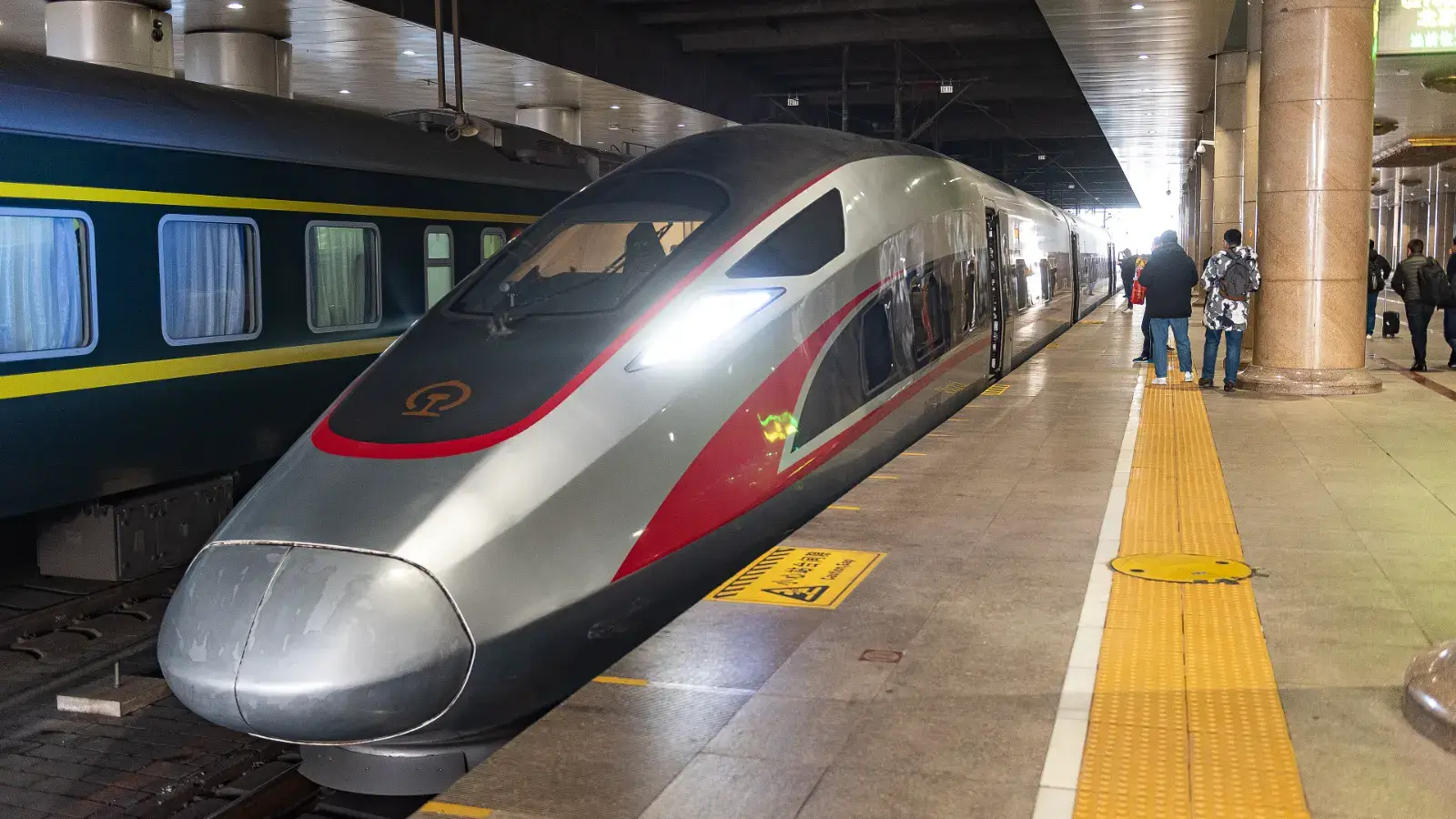
Short answer. Use Railway 12306, China Railway’s official app and website, which has an English version and no booking fee. Register with your passport at home and wait for it to be verified, then book up to 15 days before you travel. There’s nothing to print: your passport is your ticket, so use the staffed lane at the station gates. Trip.com sells the same trains in English and is easier with foreign cards, but it may add a small fee.
China’s high-speed trains are fast, frequent and good value, and booking them as a visitor is easier than it was a few years ago. The official app takes foreign passports, there’s an English version, and there are no paper tickets to collect. What trips people up is the order of things: verification takes time, sales open on a schedule, and the station gates close earlier than you’d expect.
Here’s how it works, step by step. We also pulled the real fares and journey times from China Railway’s own system for 26 routes visitors actually take, so you can see what to budget.
What’s the easiest way to book train tickets in China as a foreigner?
Book on Railway 12306 if you can verify your passport before you go, and on Trip.com if you’d rather pay by foreign card with less setting up. Both sell the same trains. Buying at the station works too, but popular trains sell out, so don’t leave it to the day.
| Where you book | Language | Fee | Payment | Good to know |
|---|---|---|---|---|
| Railway 12306 (app and 12306.cn) | English version | None | Bank cards and mobile payment; see below | Official. Needs your passport verified first |
| Trip.com | English and many others | Usually none; ¥15 per person when its staff book by hand, says its Singapore site. Check at checkout | International cards | Takes bookings before sales open and books them when they do |
| Station ticket counter | Some English at big stations | None | Cash, cards, mobile payment | Bring your passport. Queues can be long |
| Hong Kong West Kowloon counters and machines | English | None | Hong Kong dollars, Octopus, contactless cards | Only for cross-border trains |
China Railway is clear about one thing: 12306.cn is its official site, and it won’t sort out problems with tickets bought elsewhere. So if something goes wrong with an agent’s booking, the agent has to fix it.
How do I register on 12306 with a passport?
Create an account, choose “Passport” as your ID and type your details exactly as they appear on the photo page. Then wait until your status shows as verified, because you can’t buy tickets or add other passengers until it does.
- Install the Railway 12306 app (or open 12306.cn) and switch it to English.
- Register with an email address. You don’t need a Chinese phone number: the MTR’s guide to 12306 says a mainland, Hong Kong, Macao or Taiwan number works, or an email address.
- Choose “Passport”, then enter your name, nationality, passport number and expiry date exactly as printed. The name goes in without spaces or hyphens.
- Confirm the code sent to your email.
- Wait for verification.
Verification is usually automatic. If it fails, which happens more often with long or unusual names, you can upload a photo of your passport’s photo page and a photo of you holding it, or verify at a station ticket counter in China. Manual checks usually take three to five working days, reports from Guangdong’s official news site, so register at least a week before you need a ticket.
Online verification for ordinary passports only arrived in November 2023. Older guides that say you must verify at a station are out of date.
How do I buy the ticket?
Search your route and date, pick a train and a seat class, choose the passenger and pay. The ticket is then linked to that passport. There’s nothing to print, and the printable “itinerary sheet” 12306 offers is a receipt, not a ticket.
A few rules matter more than they look:
- One passport, one ticket per train and day. You can’t buy two seats on the same train with the same passport.
- Buying for friends. Add them under My Passengers. Each person needs their own verified passport details, and the MTR says one account can hold up to 19 passengers.
- Children without passports can be booked on the accompanying adult’s passport, in the same order.
- Seats are allocated by the system, so a group may not sit together on a busy train. Booking early helps.
Paying. This is where guides disagree, and we couldn’t settle it from 12306’s own pages. The MTR, which sells cross-border tickets through 12306, says overseas passengers can pay with international cards such as Visa and Mastercard, or UnionPay. A China Tourism Academy guide from April 2026 lists Alipay, WeChat Pay and UnionPay. In practice, have Alipay set up with your card as a backup, because a foreign card can fail on its security check. The MTR also warns that cancelling more than three unpaid orders in a day blocks online buying until the next day, so don’t keep retrying.
When do China train tickets go on sale?
Up to 15 days before the travel date, at a time set by the departure station. Since June 2025, 99 large stations, including Shanghai Hongqiao and Guangzhou South, open sales in 15-minute slots, so trains from the same city can go on sale at different times. The app shows each train’s sale time.
You can book from 05:00 to 01:00 each day (to 23:30 on Tuesdays). Searching and refunds work around the clock.
Two things we saw when we checked 12306 on 29 October for trains on 12 November:
- 38 trains showed “timetable adjustment, sales paused”. China Railway adjusts its timetable a few times a year, and sales can pause around the change. If the train you want is missing, check again a day or two later.
- Ten trains, including three Yunnan tourist trains, were due to go on sale later, on 7, 9 or 10 November. Not every train follows the 15-day rule.
For Golden Week in October and the Spring Festival, book the moment sales open. Trip.com takes bookings earlier than that and tries to buy them when sales start, but a booking it takes early isn’t a ticket until it’s confirmed.
How much do train tickets in China cost?
Often less than you’d expect for the distance. On 29 October we pulled every direct train for 12 November on 26 routes from China Railway’s own fare system. Beijing to Shanghai, more than 1,200 km, cost ¥525 to ¥692 in second class. Short hops like Shanghai to Suzhou cost ¥20 to ¥46.
Fares also vary by train on the same route. Faster trains, and trains at busy times, cost more. On Beijing to Shanghai, the 14 trains under five hours had a typical second-class fare of ¥661. The 24 trains taking five and a half hours or more had a typical fare of ¥598.
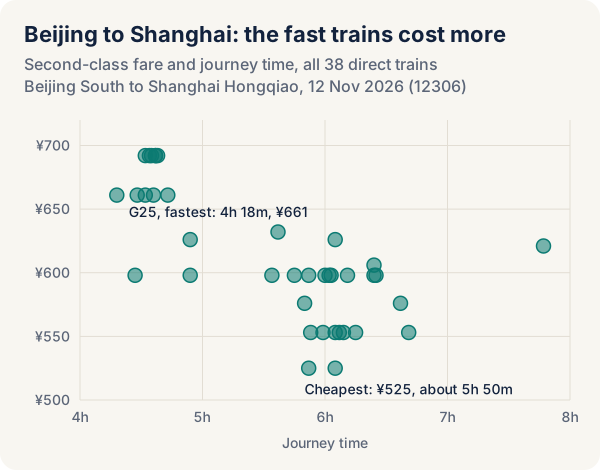
Here are all 26 routes. Each row uses the station pair with the most high-speed trains, which is usually the one you’ll want.
| Route | Main stations | Trains that day | Fastest | Second class | First class from |
|---|---|---|---|---|---|
| Beijing to Shanghai | Beijing South to Shanghai Hongqiao | 38 | 4h 18m (G25) | ¥525–¥692 | ¥883 |
| Beijing to Xi’an | Beijing West to Xi’an North | 17 | 4h 10m (G351) | ¥494–¥618 | ¥790 |
| Beijing to Tianjin | Beijing South to Tianjin | 55 | 30m (C2551) | ¥54.5 | ¥88 |
| Beijing to Datong | Qinghe to Datong South | 24 | 1h 45m (G2509) | ¥135–¥164 | ¥217 |
| Beijing to Pingyao | Beijing Fengtai to Pingyao Gucheng | 2 | 3h 35m (G625) | ¥251 | ¥402 |
| Beijing to Harbin | Beijing Chaoyang to Harbin West | 12 | 4h 33m (G101) | ¥546–¥634 | ¥873 |
| Beijing to Qufu | Beijing South to Qufu East | 29 | 2h 04m (G1) | ¥232–¥292 | ¥389 |
| Beijing to Guangzhou | Beijing West to Guangzhou South | 3 | 7h 17m (G381) | ¥1,033 | ¥1,570 |
| Shanghai to Hangzhou | Shanghai Hongqiao to Hangzhou East | 109 | 45m (G205) | ¥57–¥87 | ¥90 |
| Shanghai to Suzhou | Shanghai to Suzhou | 66 | 25m (G7032) | ¥20–¥46 | ¥48 |
| Shanghai to Nanjing | Shanghai Hongqiao to Nanjing South | 128 | 59m (G94) | ¥98–¥175 | ¥166 |
| Shanghai to Huangshan | Shanghai Hongqiao to Huangshan North | 18 | 2h 16m (G7301) | ¥182.5–¥279 | ¥293 |
| Hangzhou to Huangshan | Hangzhou West to Huangshan North | 26 | 1h 13m (G1305) | ¥87–¥115 | ¥140 |
| Shanghai to Xi’an | Shanghai Hongqiao to Xi’an North | 21 | 5h 39m (G94) | ¥652–¥782.5 | ¥1,039 |
| Xi’an to Chengdu | Xi’an North to Chengdu East | 68 | 3h 05m (G321) | ¥260–¥316 | ¥421 |
| Xi’an to Luoyang | Xi’an North to Luoyang Longmen | 73 | 1h 15m (G652) | ¥157–¥209 | ¥251 |
| Chengdu to Chongqing | Chengdu East to Chongqing West | 48 | 1h 06m (G8637) | ¥95–¥217 | ¥200 |
| Chengdu to Leshan | Chengdu East to Leshan | 53 | 46m (C6213) | ¥27–¥54 | ¥43 |
| Guangzhou to Shenzhen | Guangzhou South to Shenzhen North | 159 | 29m (G3017) | ¥45–¥74.5 | ¥99.5 |
| Guangzhou to Guilin | Guangzhou South to Guilin West | 40 | 2h 04m (G908) | ¥160–¥235 | ¥256 |
| Guilin to Yangshuo | Guilin North to Yangshuo | 12 | 22m (G2949) | ¥26–¥34 | ¥41 |
| Guangzhou to Hong Kong | Guangzhou South to Hong Kong West Kowloon | 37 | 47m (G6503) | ¥187–¥215 | ¥261 |
| Shenzhen to Hong Kong | Shenzhen North to Hong Kong West Kowloon | 87 | 18m (G895) | ¥56–¥75 | ¥120 |
| Kunming to Dali | Kunming to Dali | 53 | 1h 55m (D8652) | ¥105–¥145 | ¥168 |
| Kunming to Lijiang | Kunming to Lijiang | 10 | 3h 29m (C86) | ¥173–¥190 | ¥265 |
| Changsha to Zhangjiajie | Changsha to Zhangjiajie West | 30 | 1h 45m (G2446) | ¥129–¥166 | ¥207 |
Big cities have several stations, and “trains that day” counts only the main pair. Beijing to Tianjin had 212 direct trains across all stations, for example. The fares are 12306’s adult fares for that one date. They can be different on other days, so treat them as a guide to the level, not a quote.
Download the data: all 26 routes as a CSV, with business-class fares, the median journey time and the cheapest overnight sleeper where there is one.
Which seat class should I book?
Second class, for almost everyone. It has five seats across and is comfortable for a few hours. First class has four seats across and more space. Business class has big reclining seats, and on Beijing to Shanghai it cost more than three times the second-class fare.
| Class | Seats across | Who it suits |
|---|---|---|
| Second class | 5 (3 + 2) | Most trips |
| First class | 4 (2 + 2) | Longer trips, or a quieter carriage |
| Business class | 3 (2 + 1) or fewer | Long trips when the budget allows |
| Sleeper berths (older K, T and Z trains, and some D trains) | Bunks in compartments | Long overnight routes, to save a hotel night |
Our data shows how slow the overnight option is. The cheapest hard sleeper from Beijing to Shanghai was ¥283.5, on a train that takes 18 hours 46 minutes. The high-speed alternative takes about 4 to 6 hours.
How early should I get to the station?
At least 30 minutes before departure, says the China Tourism Academy, and gates typically close 3 to 5 minutes before the train leaves. For your first train, with a passport and a big station, we’d give yourself 45 to 60 minutes. That’s our estimate, not an official rule: you’ll queue for security and for the staffed passport lane, and stations like Beijing South are huge.
Amicly’s departure plans use the same 30-minute station buffer, plus slack for traffic on the way. Here’s what that gives on three real departures, using the rules in the app’s code. The transfer times are our rough estimates.
| Departure | Checkout | Transfer to station | At the station by | Leave the hotel by |
|---|---|---|---|---|
| Beijing South, G19 at 14:00 | 12:00 | about 40 min | 13:30 | 12:35 |
| Xi’an North, G1701 at 15:34 | 12:00 | about 45 min | 15:04 | 14:04 |
| Hong Kong West Kowloon, G6530 at 13:15 | 11:00 | about 25 min | 12:45 | 12:05 |
The app adds at least 15 minutes for traffic, or a quarter of the journey on long transfers. Xi’an North is a good example of why that matters: it’s well north of the old city, so leave earlier than the map suggests.
Hong Kong is the exception. At West Kowloon, the MTR says the real-name check stops 30 minutes before departure, and checks plus immigration usually take 30 to 45 minutes, longer with a passport. So the 12:45 in our table is the very moment the check closes for that train: too late. Aim for an hour before departure there. You can start the process up to 90 minutes before your train.
What happens at the station?
You show your passport several times: at the entrance, at the ticket gate and, sometimes, to staff on board. You may need it again to leave the station at the other end.
- At the entrance, staff check your passport against your booking.
- Security scans your bags, much like at an airport.
- Find your gate. The departure boards list each train number with its waiting area and gate, so remember your train number (G25, D8652 and so on).
- At the gate, use the staffed lane. The automatic gates read Chinese ID cards, and the China Tourism Academy says most foreign passports won’t work in them. You can also scan the Ride Code in the 12306 app.
- Board. Your carriage and seat are in the app and on the booking email. The platform floor is marked with carriage numbers.
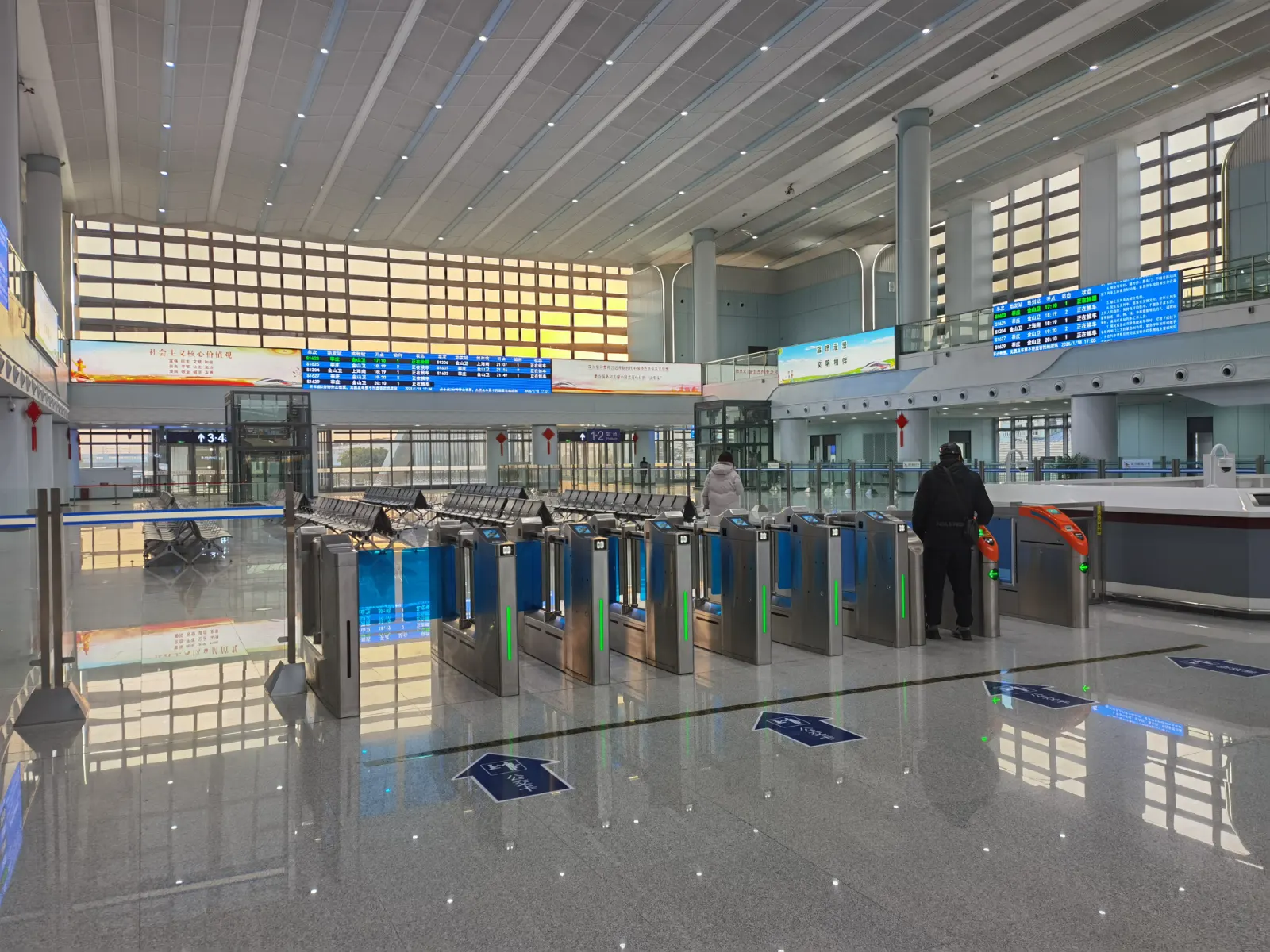
Luggage. 12306 allows 20 kg of hand luggage per adult and 10 kg per child. On high-speed trains each item must be under 130 cm in total (length, width and height added up). There’s space over the seats and at the end of each carriage.
Can I change or refund a China train ticket?
Yes, on 12306, before the train leaves. You can change a ticket once, and refunds are free only well in advance. These are 12306’s rules for mainland trains, checked on 29 October 2026:
| When | Refund fee | Change fee (to a train on a later date) |
|---|---|---|
| 8 days or more before departure | Free | Free |
| More than 48 hours | 5% | Free |
| 24 to 48 hours | 10% | 5% |
| Less than 24 hours | 20% | 15% |
| After departure | No refund | 40% for a next-day train; free for a later train the same day |
The minimum refund fee is ¥2. During the Spring Festival rush, refunds of changed tickets cost a flat 20%.
The 30-minute rule. Since 2 February 2026, if you booked the wrong train you can refund one order a day for free, as long as you do it within 30 minutes of buying and at least 4 hours before departure. It applies to tickets bought on 12306’s app, website or Alipay mini-program, including West Kowloon trains, but not to changed or waitlisted tickets.
Hong Kong cross-border tickets bought from the MTR have their own scale: you get back 95% at 8 days or more, 70% between 48 hours and 7 days, and 50% within 48 hours.
Do children need train tickets in China?
From age 6, yes. Since January 2023, China Railway sets children’s tickets by age, not height. Under 6, a child travels free without their own seat, one per paying adult. From 6 to under 14, a child ticket costs half. From 14, it’s the full fare. A child’s ticket must be in the same class as the adult’s.
If you’d rather a toddler had their own seat, buy them a child ticket. On a full train, a child travelling free may spend the trip on your lap.
Can I book the high-speed train between Hong Kong and mainland China?
Yes, on 12306 (in yuan), or at West Kowloon station and from agents (in Hong Kong dollars). For 12 November, 12306 listed 87 trains from Shenzhen North to West Kowloon, the fastest taking 18 minutes, and 37 from Guangzhou South.
A few rules are different from mainland trains. Names and passport numbers can’t be changed after booking, child tickets can’t be bought on their own online, and West Kowloon’s ticket machines take up to HK$1,000 per transaction. The departure process includes immigration for both sides, so allow the hour we suggest above.
Questions about train tickets in China
Do I need a Chinese phone number for 12306? No. You can register with an email address.
Do I need to print my ticket? No. Your passport is your ticket. The itinerary sheet 12306 offers is only a receipt.
What if my train is sold out? Look at other trains on the same route, nearby stations or another class, and check again later, because refunds free up seats. China’s 12306 has a waitlist feature, but we couldn’t confirm that it works for passport accounts, so don’t count on it.
Can I buy a ticket for someone else? Yes, if their passport details are added to your account and verified.
What’s the difference between G, D and C trains? All three are high-speed services. G trains are usually the fastest, D trains are often a little slower, and C trains run shorter intercity routes. K, T and Z trains are older, slower trains, some with sleepers.
Can I use the train if I can’t read Chinese? Yes. Signs at big stations usually include English, and your train number and gate are on the boards in Latin letters and numbers. Set up a map app that works in China to get to the station.
Going to China? Amicly’s China kit, still a draft until we finish reviewing it, lists Railway 12306 with the other apps to set up at home, Alipay and Amap included, with a checklist that works offline.
Sources
- Amicly dataset: 12306 fares and journey times for 26 routes in China, travel date 12 November 2026 (checked 29 October 2026) · checked 29 October 2026
- China Railway 12306: FAQ (ticketing, endorsement and refund, miscellaneous) · checked 29 October 2026
- MTR High Speed Rail: ticketing via 12306 · checked 29 October 2026
- MTR High Speed Rail: ticket purchase channels · checked 29 October 2026
- MTR High Speed Rail: departure process at Hong Kong West Kowloon · checked 29 October 2026
- MTR High Speed Rail: refunds · checked 29 October 2026
- Travel China (China Tourism Academy): taking trains in China (14 April 2026) · checked 29 October 2026
- Chongqing government: buying train tickets as a foreigner (8 June 2026) · checked 29 October 2026
- GDToday: how foreign passport holders verify their identity on 12306 · checked 29 October 2026
- China Services Info: online passport verification on 12306 (December 2023) · checked 29 October 2026
- IT Home: staggered ticket sale times at 99 stations from 7 June 2025 · checked 29 October 2026
- Trip.com Singapore: China train refunds and booking fees (26 August 2026) · checked 29 October 2026
- Wikimedia Commons: CR400AF train at Beijing West (CC BY-SA 4.0) · checked 29 October 2026
- Wikimedia Commons: ticket gate of Xinzhuang Railway Station, Shanghai (CC BY 4.0) · checked 29 October 2026
Spotted something out of date? Report a correction. How we review